
Oilfield debris screen pipe
The core component of an oil cuttings catcher – the filter cartridge assembly
The filter cartridge assembly is made of stainless steel wedge wire (V-shaped wire) mesh, using 316L material, possessing corrosion and erosion resistance, suitable for the high-salt, high-pressure environment of oil and gas wells;
It is made of alloy steel forgings, with a polished/nickel-plated surface to ensure high-pressure sealing performance.
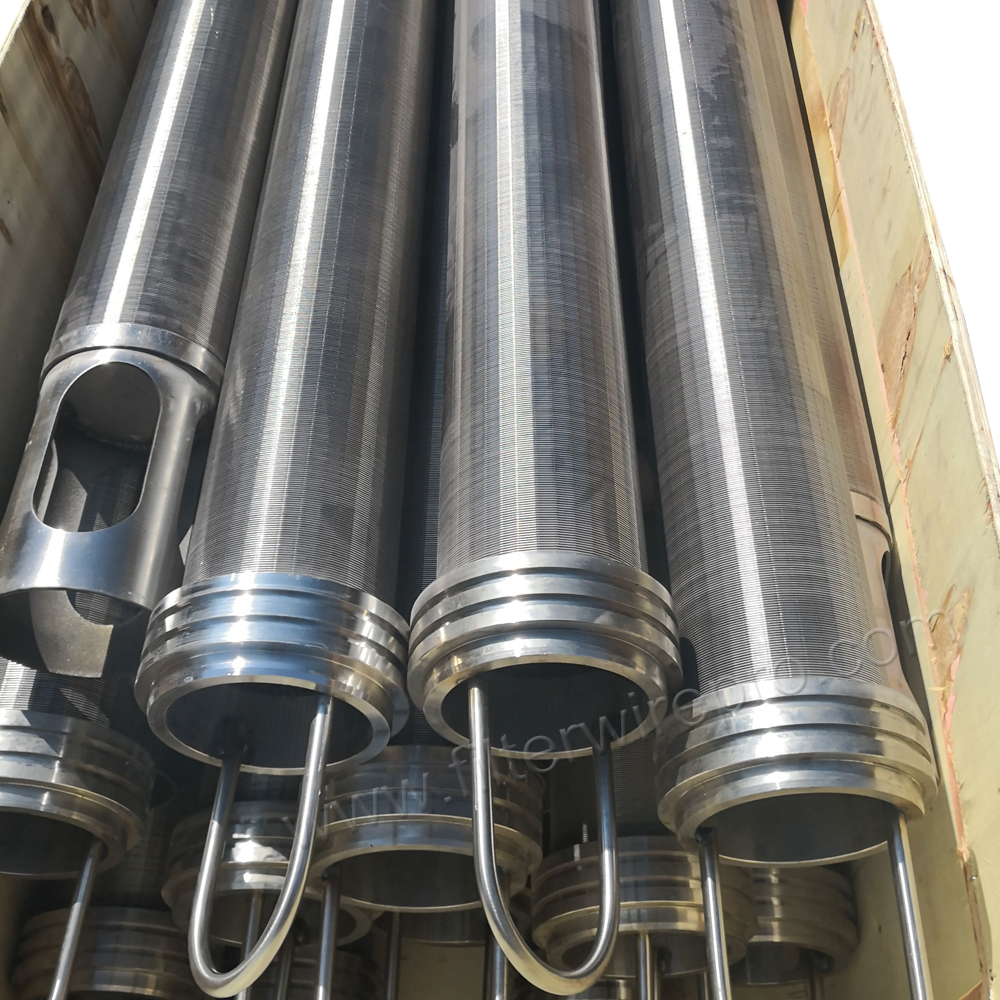
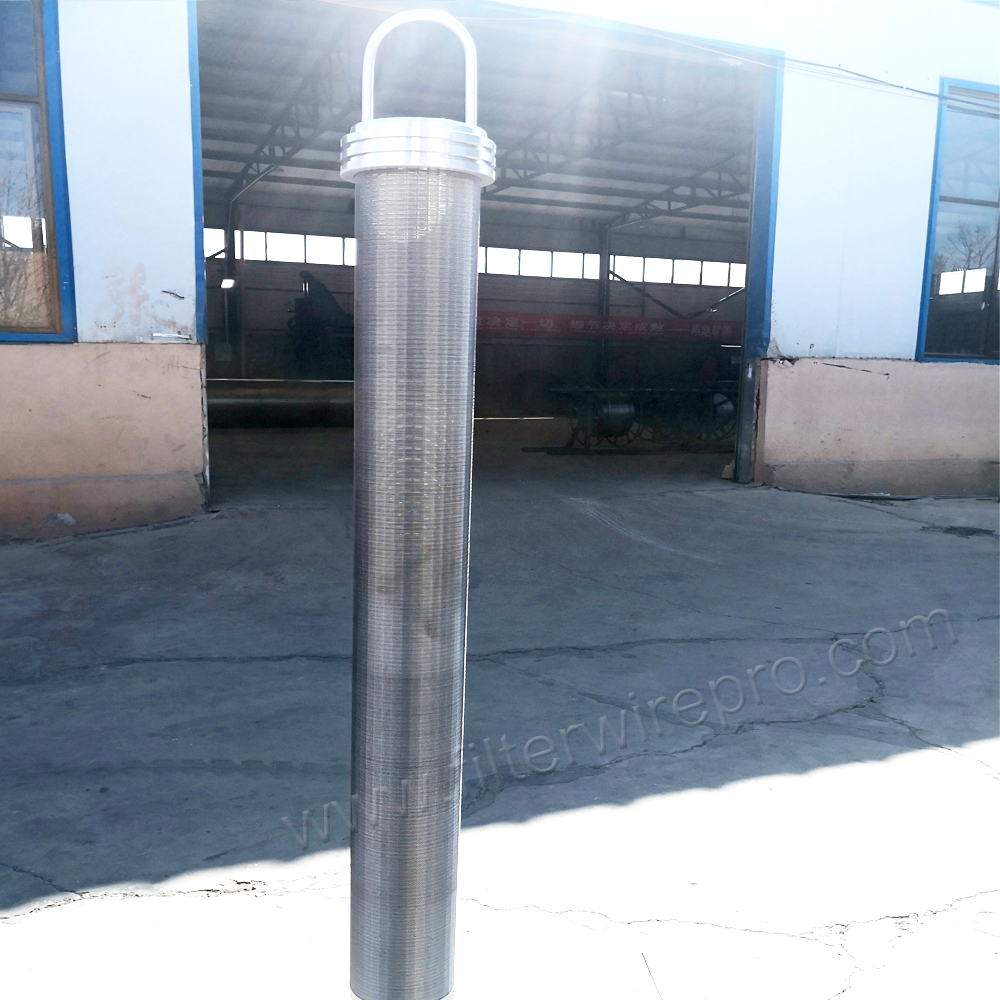
Applications of the Filter Cartridge
It is a specialized component for the “wellbore flowback fluid treatment” stage in oil/gas extraction operations.
Coiled Tubing Drilling: When drilling bridge plugs and cement plugs in the wellbore using coiled tubing, the metal/cement debris generated during drilling returns to the surface with the flowback fluid. This filter cartridge intercepts this debris, preventing blockage of downstream manifolds and separators.
Post-Fracturing Flowback: After fracturing, when fracturing fluid (including proppant residue and formation cuttings) is flowed back from the wellbore, the filter cartridge intercepts large particles of residual sand, protecting surface treatment equipment.
Gas/Oil Testing: During gas testing, perforation residue, rust, and other impurities in the wellbore are carried out by the gas flow. The filter cartridge filters these impurities, preventing damage to instruments and valves during the gas testing process.
Production Recovery from Blocked Wells
Application Scenario: For gas wells where downhole blockages cause frequent shut-ins, a cuttings catcher is installed at the wellhead to intercept solid impurities in the flowback fluid.
Production Increase Due to Sand Production Blockage
Application Scenario: In a well in Tiandong (a low-permeability horizontal well), repeated blockage of the needle valve due to downhole sand production caused a decline in production from 25,000 cubic meters per day. After installing the cuttings catcher, the blockage problem in the gas flow channel was completely resolved, and the daily production increased to 45,000 cubic meters.